
Multimedia Projects
The Effects of Poverty on Human Rights Violations Research and Statistical Analysis
On-Campus Housing Interview
This project consists of a video interview that focuses on the challenges that students at The University of Tampa face in regards to on-campus housing. The video project captures the firsthand experiences and perspectives of these students struggling with housing shortages. The interview was organized, filmed, and edited to effectively portray the narrative and engage viewers. The final product gives insight into student housing struggles at the university and raises awareness of the issue.
Expatriate Experience Interview
This project involved putting together a video interview that explores the personal experiences of a former expatriate now living in the United States. The video captures the unique cultural insights and challenges involved with growing up while living abroad. The interview was conducted and edited to best portray a reflective narrative and the key insights of life as an expatriate. The end result offers an authentic perspective and greater understanding of the expatriate experience.
Capstone Video Project
This video project for the University of Tampa’s Advertising and Public Relations Capstone course explores the ethical concerns surrounding the growing use of artificial intelligence in the communications field. It highlights key issues, such as: privacy, bias, discrimination, transparency, sustainability, and responsibility. It also poses a governance framework designed to establish an enforceable industry-wide standard for ethical AI use. Centered around the principles of transparency, accountability, impartiality, and public trust, the framework outlines concrete policy measures. These include: disclosure requirements, human oversight, third-party bias audits, and sustainability reporting. By presenting a mandatory model rather than voluntary guidelines, the project demonstrates how enforceable governance can protect audiences while fostering responsible and trustworthy communication practices.
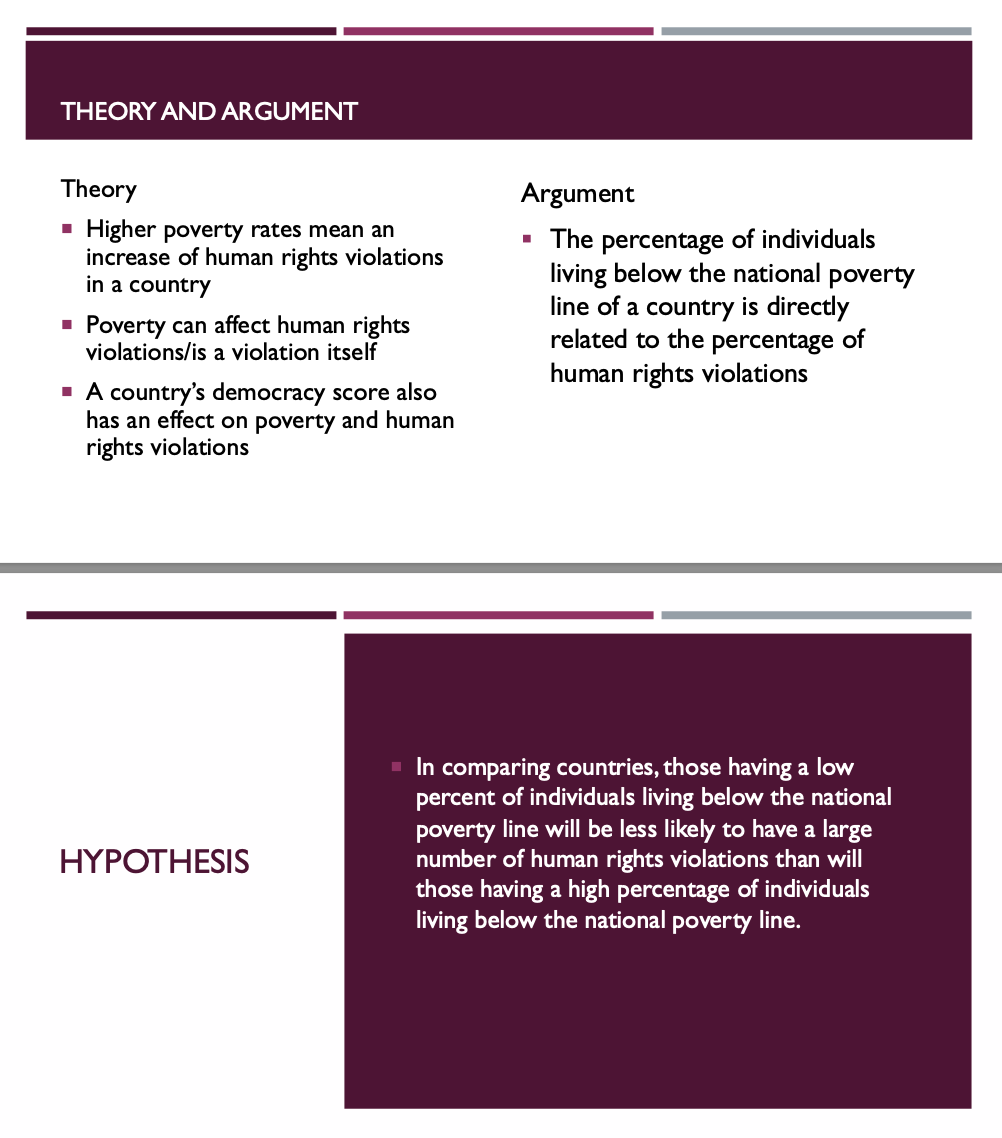
This research project examines the relationship between poverty levels and human rights violations across countries, arguing that higher national poverty rates are directly associated with increased human rights violations. Supported by reviewed political and human rights theory, the study also explores the influence of a country's democracy score, framing poverty both as a contributing factor to and a form of human rights violation. Using a quantitative methodology that includes multiple OLS regression models, chi-square tests, correlations, and visual analysis, the research analyzes cross-national data with poverty and human rights scores measured on interval scales. The findings of the study support the hypothesis that countries with lower percentages of people living below the national poverty line tend to experience fewer human rights violations than those with higher poverty rates.